
Robotic Surgery Training in India 2026 — What Surgeons Need to Know
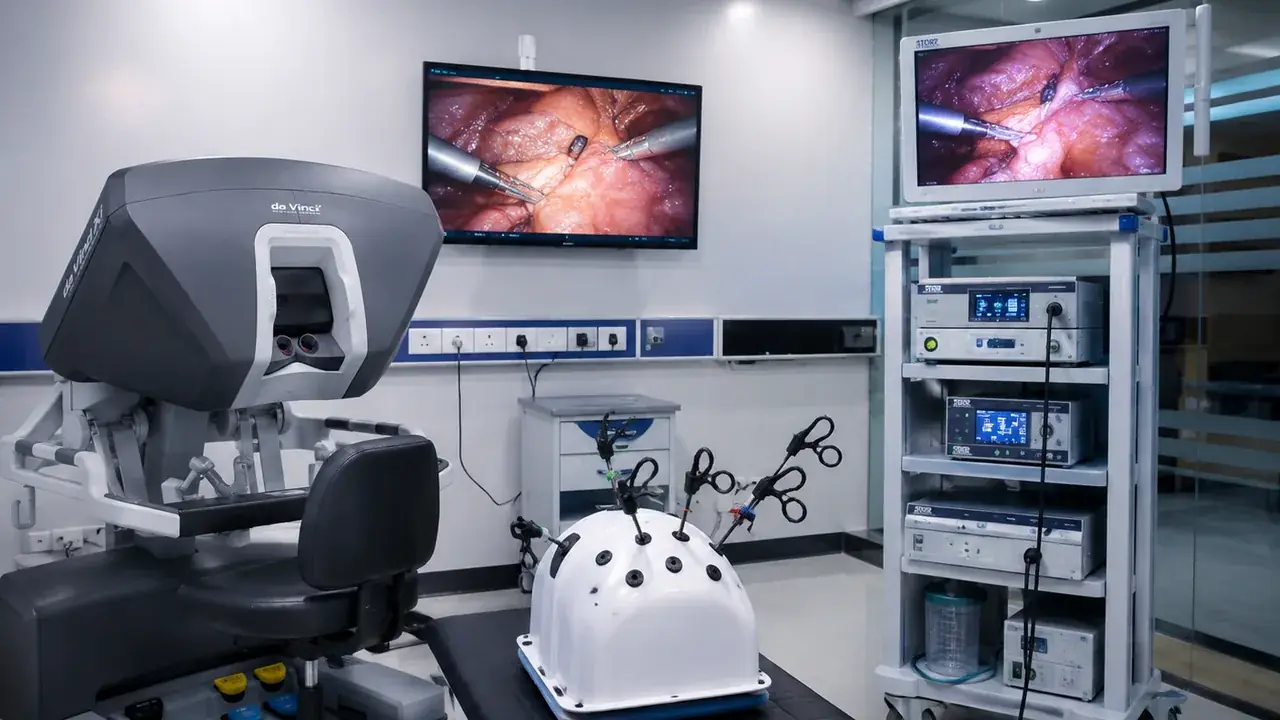
Robotic surgery in India has moved from a novelty to a clinical expectation faster than most of us anticipated. In 2019, fewer than 40 hospitals in India had robotic surgical systems. By 2026, that number exceeds 250 — and is growing at roughly 30 new installations per year, driven by the domestic rollout of the SSI Mantra system and continued Da Vinci installations at tier-1 and tier-2 hospitals alike.
For practicing surgeons, the question is no longer "should I learn robotic surgery?" It is "when — and where?"
The Robotic Surgery Landscape in India: 2026
Two platforms dominate robotic surgery training in India:
Da Vinci Surgical System (Intuitive Surgical, USA)
The global gold standard. Da Vinci Xi/X systems offer 3D HD vision, 7-degree instrument articulation, and tremor filtration. Training pathways are structured: simulator-based onboarding followed by proctored live cases. Credentials are issued by Intuitive Surgical and recognised internationally. Cost of training at accredited Da Vinci centres typically ranges from ₹75,000–₹2,50,000 for a structured program.
SSI Mantra (SS Innovations, Gurgaon)
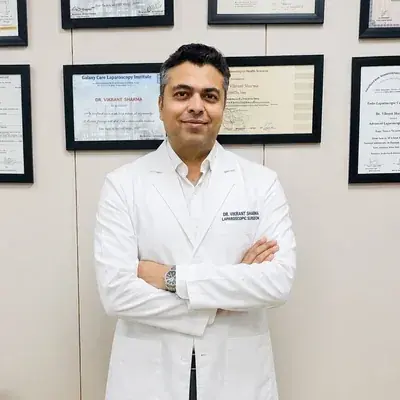
India's indigenous robotic surgical system. The Mantra is FDA-cleared, CE-marked, and deployed at over 60 hospitals across India. Proctorship programs are issued by SS Innovations through certified proctors. Dr. Vikrant Sharma at Solace Training Academy is one of the officially certified SSI Mantra proctors in North India — one of a small cohort authorised to certify other surgeons on the platform.
Who Is Eligible for Robotic Surgery Training?
The answer varies by program, but a practical baseline is:
- MS/DNB General Surgery, GI Surgery, Urology, or Gynaecology — any of these qualifications is sufficient
- Prior laparoscopic experience — not mandatory for orientation programs, but strongly recommended for advanced modules
- No minimum case volume requirement — robotic surgery has a gentler learning curve than conventional laparoscopy for many procedures because the console provides superior ergonomics and 3D vision
What Robotic Surgery Training Actually Involves
A well-structured robotic surgery training pathway has three phases:
Phase 1 — Console & System Familiarity
Docking the patient cart, instrument exchange, 3D camera manipulation, clutch and arm control. This is learnable in a single day on a simulator or dry-lab. At Solace, this forms Day 1 of our Robotic Surgery Orientation Programme.
Phase 2 — Simulator-Based Skill Development
Validated simulation modules for basic tasks — needle driving, ring transfer, energy dissection. Performance metrics are recorded and used to benchmark progress. Simulators used: da Vinci Skills Simulator and the Mimic MScore system where available.
Phase 3 — Proctored Live Cases
Console-side observation and bedside assistance during live procedures, progressing to supervised console time. For SSI Mantra credentialing, a minimum number of proctored cases is required before independent practice — the exact number depends on the procedure type.
Career Impact of Robotic Surgery Credentials
The career case for robotic surgery training is compelling. Hospitals installing new robotic systems face an immediate need to credential their existing surgical team — and proctored credentialing from a certified centre like Solace Training Academy shortens that pathway significantly. Beyond credentialing, surgeons with robotic skills command:
- Higher package offers from hospitals investing in robotic programs
- Faster growth to senior consultant and department head roles
- Eligibility to become proctors themselves, creating a secondary income stream and reputational benefit
- Expanded patient referral from patients specifically requesting robotic procedures
Training Near Delhi? Sonipat Is Your Answer
Surgeons in Delhi NCR, Haryana, Chandigarh, and western UP typically travel to Hyderabad, Mumbai, or Chennai for robotic surgery training — spending 5+ days, significant money, and significant disruption. Solace Training Academy brings SSI Mantra proctorship and Da Vinci orientation to Sonipat, a 45-minute drive from Delhi's Outer Ring Road.
Our Robotic Surgery pillar offers four programs: orientation, GI & hepatobiliary, gynae, and urology. The next Robotics for Surgeons workshop runs 2–3 October 2026.
Interested in the October workshop or a dedicated robotic training program?
Send your details here and our admissions team will get back within 24 hours with eligibility confirmation and seat availability.
Related articles
Ready to train?
Tell us which program you are interested in — we respond within 24 hours.